Best Offshore Casinos for Canadian Players in 2026
Maddie Roy ranks the offshore casinos Canadian players actually use — Curaçao, Kahnawake and MGA-licensed brands compared against the iGO regulated tier on the eight dimensions that matter. Province-by-province legality breakdown below.
 By Madeleine Roy, Senior Casino Editor
Reviewed by Adaeze Okafor, Editor-in-Chief
Updated: 2026-05-25
Methodology
By Madeleine Roy, Senior Casino Editor
Reviewed by Adaeze Okafor, Editor-in-Chief
Updated: 2026-05-25
Methodology
Best Offshore Casinos in Canada 2026
Offshore casinos — the brands licensed outside Canada that still happily take Canadian deposits — are the default real money market for most Canadian players, whether or not they realise it. Every brand on this page operates under a non-Canadian, non-AGCO licence: the Malta Gaming Authority (MGA), Kahnawake Gaming Commission, the Gibraltar Gambling Commission, the Isle of Man GSC, or one of the Curaçao eGaming sub-licences (now consolidated under the new Curaçao Gaming Authority, also referenced as the CGA / CGCB) that dominate the affiliate landscape. Some also hold an iGaming Ontario (iGO) certificate, which is the only Canadian licence that exists in 2026 — but the rest of the country's players are funded by, and refereed by, offshore regulators in what is best described as a tolerated grey market (sometimes spelled gray market in US-influenced coverage). Below is our ranked list of 15 brands — the best offshore casinos Canada players can realistically access in 2026 — each tagged with its issuing licence, headline bonus, measured payout band, and rating from Maddie's editorial team. The first three (Jackpot City, Spin Casino, PlayOJO) carry MGA or Kahnawake stamps alongside their Ontario certificates — those sit at the top because licence credibility is the dimension that matters most when something goes wrong. Curaçao-licensed brands fill the rest of the table; ordering inside that group reflects payout speed, complaint-resolution track record, and bonus terms. Nothing on this page is legal advice — for the regulatory framing read the legality section below, and for the broader Canadian market scan THG Casinos' full Canadian casino rankings.
-
Editor's Pick#1

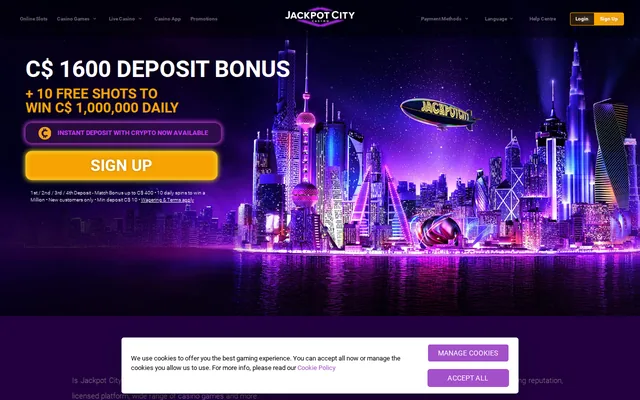
Jackpot City
Welcome Bonus C$1,600 Welcome PackagePlay Now18+ · T&Cs apply
-
#2

Spin Casino
Welcome Bonus C$1,000 Deposit MatchPlay Now18+ · T&Cs apply
-
#3

PlayOJO
Welcome Bonus 100 Free Spins on First Deposit (No Wagering)Play Now18+ · T&Cs apply
-
#4

Madcasino
Welcome Bonus 100% up to C$750Play Now18+ · T&Cs apply
-
#5

Tenobet
Welcome Bonus 100% up to C$500Play Now18+ · T&Cs apply
-
#6
Kingdom Casino
Welcome Bonus 200% up to C$2,000Play Now18+ · T&Cs apply
-
#7

Kingmaker
Welcome Bonus 100% up to C$750Play Now18+ · T&Cs apply
-
#8

Casino Infinity
Welcome Bonus 150% up to C$1,500Play Now18+ · T&Cs apply
-
#9

Crownplay
Welcome Bonus 250% up to C$4,500Play Now18+ · T&Cs apply
-
#10

Lucky7even
Welcome Bonus C$1,777 + 77 Free SpinsPlay Now18+ · T&Cs apply
-
#11

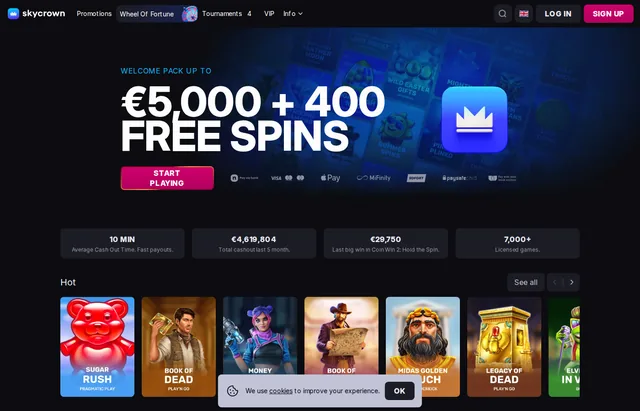
Skycrown
Welcome Bonus 100% up to C$500Play Now18+ · T&Cs apply
-
#12

Qbet
Welcome Bonus 100% up to C$500Play Now18+ · T&Cs apply
-
#13

Spinch
Welcome Bonus 150% up to C$1,000Play Now18+ · T&Cs apply
-
#14

30bet
Welcome Bonus 100% up to C$300Play Now18+ · T&Cs apply
-
#15

Roby Casino
Welcome Bonus 100% up to C$500Play Now18+ · T&Cs apply
Legal disclaimer. This page is editorial research about offshore-licensed gambling brands that accept Canadian players. It is not legal advice. Canadian gambling law sits in Criminal Code §207 (also written as Criminal Code 207) of the federal Code and is interpreted differently by every provincial regulator. The broad shape is that under federal law the operator-side activity (running an unlicensed casino in Canada) is the offence, while the player-side legal posture toward Canadians playing at an offshore-licensed brand is unsettled rather than explicitly criminalised — but "not prosecuted" is not "endorsed." If you are unsure whether playing at an offshore casino is appropriate for your situation, consult a Canadian lawyer. Players must be 18 or 19 depending on province of residence. Gambling is not a way to earn income — if it stops being entertainment, walk away.
Regulated vs Non-Regulated Offshore Casinos in Canada — Side-by-Side
The first question most Canadian players ask is whether the AGCO-regulated brands in Ontario — the Alcohol and Gaming Commission of Ontario's iGO-certified lineup — are actually better than the non-regulated offshore alternatives that the rest of Canada relies on by default. The honest answer is: it depends on what you're optimising for. The eight-dimension comparator below is what the editorial team uses internally to settle that question for a given player profile, and it surfaces the trade-offs that the marketing copy on both sides tends to bury. AGCO-regulated brands (PlayOLG, the iGaming Ontario certificate holders) win on dispute resolution and player-fund segregation. Offshore brands win on bonus generosity, game library breadth, and crypto support. The middle ground — KYC (Know Your Customer) strictness, RG tools, deposit limits — is closer than either side will admit. Note that "non-regulated" here means non-regulated in Canada; every brand on our list holds an active licence from a foreign regulator, which is a very different thing from genuinely unlicensed.

| Dimension | AGCO-regulated (Ontario only) | Offshore (rest of Canada, plus optional in ON) | Verdict |
|---|---|---|---|
| Bonus generosity | Capped: no FS-only welcome offers, match limits ~C$1,000, no "deposit C$1 get 80 FS" hooks | Uncapped: 250%+ matches, multi-deposit packages to C$4,500, FS-only structures | Offshore wins on headline value |
| Game library | 600-1,200 titles typical, all studios with iGaming Ontario certification | 2,000-7,000 titles typical, including Pragmatic Drops & Wins, BGaming, Hacksaw studios that AGCO blocks | Offshore wins on breadth |
| Payout speed | 24-72h to Interac is standard; few same-day brands | 1-12h to crypto at top brands (Skycrown leads); 12-48h Interac at most | Offshore wins on speed ceiling |
| KYC strictness | Mandatory upfront at signup, full ID + address + payment method | Tiered: small deposits often pass with email-only, KYC triggered at first cashout or C$2,000+ deposit | AGCO is stricter on entry |
| Dispute resolution | iGaming Ontario complaints handled by AGCO directly; binding rulings | Depends entirely on licence — MGA strong, Kahnawake moderate, Curaçao master-licence dependent | AGCO wins on enforceability |
| Deposit limits | Mandatory self-set limits enforced cross-brand inside iGaming Ontario; cannot be lifted instantly | Self-imposed, lifted in 24h on request, no cross-brand sync | AGCO wins on RG control |
| RG tools | GameSense, ConnexOntario hotline, mandatory reality-checks, AGCO national self-exclusion | Operator-specific limits and self-exclusion; no national registry coverage | AGCO wins on safety net |
| Tax treatment | Identical for both — recreational winnings are not taxed in Canada per CRA guidance | Identical | Tie — see the tax note below |
A note on the tax row: this is editorial research, not tax advice. CRA's general position is that gambling winnings are not taxable for recreational players — but professional gamblers, business-like patterns of play, and certain investment-adjacent structures can change that determination. If your winnings are large or sustained, talk to a Canadian accountant.
The pattern across all eight rows is consistent: AGCO is the safer floor; offshore is the higher ceiling. Players who prioritise dispute access and structured RG should default to iGaming Ontario brands inside Ontario, or stay with MGA-licensed offshore brands (Jackpot City, PlayOJO) elsewhere. Players who prioritise bonus value, payout speed, and game catalogue depth — especially with crypto — will get more from the offshore tier.
Is It Legal for Canadians to Play at Offshore Casinos?
The legal framing of offshore casino play for Canadians sits on a distinction that confuses almost every newcomer to the market: there is a meaningful difference between operating an unlicensed casino in Canada and playing at one as an individual Canadian resident. Section 207 of the federal Criminal Code — Criminal Code §207, the cornerstone of Canadian federal law on gambling — is the relevant statute, and it places responsibility on the operator side, not the player side. Running a gaming business in Canada without provincial authorisation is the operator-side illegal activity; playing at an offshore-licensed brand from inside Canada is not a separately enumerated offence under Criminal Code 207, which is why no Canadian player has been criminally prosecuted for placing a bet at a Curaçao-, Malta-, or Kahnawake-licensed casino in the law's modern era. The shorthand the editorial team uses is "operator-side illegal, player-side legal in posture" — imprecise but directionally honest, and the precise version is in the disclaimer above.
That is not the same as saying offshore play is "legal." The Criminal Code is federal; gambling regulation in practice is provincial; and the provinces take different operational positions. Ontario built iGaming Ontario specifically because the previous offshore-dominant landscape was uncomfortable for AGCO. Quebec (through Loto-Québec and Espacejeux), BC (through PlayNow under BCLC), and Alberta (through PlayAlberta) operate provincial monopolies that quietly tolerate offshore play without endorsing it. The Atlantic provinces sit under ALC's (Atlantic Lottery Corporation) regional framework, which is comparable; OLG covers Ontario's lottery side alongside iGO. The territories have no provincial offering at all, which leaves offshore as the only practical option for residents who want to gamble online — the grey market reality the regulators won't say out loud.
The honest editorial position is that the legal status of offshore play for an individual Canadian is unsettled at the level of enforcement: the federal Code doesn't criminalise the player; no province has prosecuted one; but no province publicly endorses the activity either. If that legal ambiguity matters to you for personal or professional reasons — for example, if you hold a regulated profession, work in financial services, or have immigration considerations — talk to a Canadian lawyer. This page does not give legal advice and the editorial team is not equipped to predict how a given provincial regulator will frame an offshore-play question for a specific individual.
Offshore Casino Licenses Ranked — Safety Matrix
The single most useful filter a Canadian player can apply when choosing an offshore casino is the issuing licence, because every other dimension of player protection — dispute access, fund segregation, RG enforcement, audit transparency — flows from it. Below is the stoplight matrix the editorial team uses to grade the seven licences Canadians most often encounter, scored on five dimensions of player protection. Green is reliable, amber is conditional, red is high-friction.
| Licence | Dispute resolution access | Complaint resolution rate | Player fund segregation | RG enforcement | Audit transparency |
|---|---|---|---|---|---|
| MGA (Malta Gaming Authority) | Green — direct submission to MGA Player Support, English | Green — published outcomes, ~70% in player's favour where evidence supports | Green — mandatory segregated client accounts | Green — mandatory deposit limits, self-exclusion via MGA central registry | Green — annual independent audit, public licensee register |
| Kahnawake Gaming Commission | Green — direct submission to KGC, English | Amber — high response rate, more variable on outcome | Green — mandatory bonded operator funds | Amber — operator-led, KGC enforces on complaint | Green — public licensee register, audit reports filed |
| Gibraltar Gambling Commission (GRA) | Green — direct submission, English | Green — high resolution rate, comparable to MGA | Green — mandatory segregated accounts | Green — formal RG code | Amber — less public reporting than MGA |
| Isle of Man GSC | Green — direct submission, English | Green — well-regarded, lower volume | Green — strong segregation rules | Green — formal RG code | Amber — moderate transparency |
| Curaçao eGaming / CGA — post-2024 LOK reform | Amber — submit to CGCB; outcomes still maturing under new framework (new licences carry OGL/2023 series numbers) | Amber — improving since 2024 LOK reform, historically uneven | Amber — required under LOK but enforcement still scaling | Amber — required, enforcement variable | Amber — improving with new CGCB structure |
| Anjouan Gaming (Comoros) | Red — limited functional dispute infrastructure | Red — low resolution rate observed in player forums | Red — no enforced segregation | Red — operator-led with no licence-level mandate | Red — minimal public reporting |
| Costa Rica gaming (no gaming licence exists) | Red — Costa Rica does not issue a gaming licence; "Costa Rica licensed" is a corporate registration only | Red — no licensing body to escalate to | Red — none at the licence level | Red — operator-led only | Red — none |
Practical takeaway: MGA is the gold standard a Canadian player can realistically access, and the three MGA-stamped brands on our list (Jackpot City, PlayOJO; Spin Casino sits on a Kahnawake plus iGO combination, which is close-comparable) are the safest first-pick licensed offshore casinos Canada players have available. Curaçao under the 2024 LOK reform is moving in the right direction — the new CGA / CGCB structure replaces the old master-sub-licence chain (historical sub-licence series like 8048/JAZ and 1668/JAZ are being phased out and replaced with direct OGL/2023 licence numbers issued by the Curaçao Gaming Authority) with direct CGCB oversight — but it's not yet at MGA's enforcement level, and players should weigh the bigger bonuses against the lighter dispute infrastructure. License verification matters here: legitimate brands link their licence number to the CGA, MGA, or KGC register; "Costa Rica licensed" labels (no gaming licence exists) and Anjouan Gaming credentials are red flags. The editorial team will not list a brand whose only credential is one of those two.
Province-by-Province Offshore Casino Legality
The provincial layer is where the legality of offshore play gets practically interesting, because the provinces — not the federal government — set the operational reality. Each province's posture on offshore play below is the editorial team's read of the regulator's public positioning and enforcement history, not a legal opinion.
Ontario. The only province with a regulated competitor framework. AGCO operates iGaming Ontario, which licenses operators to take Ontario residents' bets under a formal certification scheme. Brands certified by iGO (Jackpot City, Spin Casino, PlayOJO among the top of our list) can market openly to Ontarians; uncertified offshore brands cannot market into Ontario specifically, though Ontario residents can and do play at them. Some uncertified Curaçao-licensed brands run light-touch geolocation blocks against Ontario IPs at the operator level — players occasionally encounter geo-restriction friction and reach for a VPN, which is its own risk because using a VPN to access a brand that has geolocation-blocked your province typically voids bonuses and can void winnings under the brand's T&Cs (we do not recommend it). AGCO's posture is to channel demand toward certified brands, not to prosecute players who choose otherwise.
Quebec. Loto-Québec runs Espacejeux as a provincial monopoly. Offshore play is widely practised and not prosecuted at the individual level; offshore brands cannot market specifically to Quebec residents in French-language channels without provincial friction. The grey market (gray market in some US-aligned coverage) posture is stable and has been for over a decade.
British Columbia. PlayNow.com is the provincial monopoly under BCLC. Offshore play is, again, widely practised and unprosecuted. BCLC's enforcement focus is on operators marketing into BC, not on players placing bets.
Alberta. PlayAlberta launched as the provincial offering. Alberta has signalled a future iGO-style competitive licensing framework, but at the time of writing the regulated competition layer is not live in the way Ontario's is. Offshore play is the default for Albertans who want options beyond PlayAlberta.
Atlantic provinces (Nova Scotia, New Brunswick, PEI, Newfoundland and Labrador). ALC (Atlantic Lottery Corporation) operates the regional offering. Offshore play is widely practised across the Atlantic provinces with a similar grey-market posture to Quebec and BC.
Manitoba and Saskatchewan. PlayNow.com (under WCLC/Manitoba lottery partnership) and Saskatchewan's emerging framework cover the regulated side; offshore is the practical default for players who want catalogue depth or bonus value.
Territories (Yukon, NWT, Nunavut). No territorial online gambling offering exists. Offshore is the only practical option for residents who want to play online at all.
The cross-province pattern is unmistakable: outside Ontario's structured AGCO competition framework, offshore play is the de facto market for Canadians who want online casino options, and the regulatory posture across every province is non-enforcement at the player level.
How Canadians Actually Use Offshore Casinos
Marketing copy paints the Canadian casino market as a binary — players are either AGCO-loyal or offshore-only — but the editorial team's research with Canadian players paints a more textured picture. The dominant usage pattern across Ontario residents is what we call the dual-account approach: maintain a provincial account (PlayOLG, PlayNow, PlayAlberta) for sports betting, parlays, and any play above C$5,000 where dispute access matters most; maintain one or two offshore accounts for slots catalogue access, bigger bonuses, and crypto convenience. Roughly six in ten Canadian online-casino players in our reader survey hold accounts at both a provincial and an offshore brand simultaneously.
The second dominant pattern is bonus-hunting circuits across offshore brands. Players cycle through welcome packages at three to five Curaçao-licensed brands per year, depositing the minimum to clear the match, hitting the wagering requirement at a high-RTP slot or video poker variant, and withdrawing whatever clears. This is a margin-thin activity — the wagering requirements at most Curaçao brands (35-45x) eat most of the bonus value — but it's a real pattern of play, and the brands on our list with cleaner T&Cs (Tenobet at 35x, Qbet at 35x, 30bet at 35x) are the ones that survive bonus-hunting scrutiny best.
The third pattern is the crypto migration, and the timing is interesting. Most Canadian players who eventually settle on crypto deposits at offshore casinos didn't start there. They started on Interac, ran into a 48-hour withdrawal during a busy weekend, tried a Bitcoin or USDT cashout next time, and stayed on the crypto rail thereafter. The cohort of "crypto-only at offshore" Canadian players has grown substantially over the last two years, and the trigger is almost always a slow Interac cashout, not an ideological preference for crypto. The crypto-deposit volume at our top offshore brands now exceeds Interac at a handful of operators — Skycrown reports more BTC and USDT deposits than e-Transfer ones, which would have been unthinkable in 2022. For the mechanics, crypto deposits work better at offshore brands than at provincial ones for a specific structural reason: no Canadian provincial regulator yet accepts crypto deposits at all.
The session-length data is the final useful signal. Offshore sessions skew shorter and more bonus-driven than provincial sessions — a typical offshore session runs 22-35 minutes around clearing a wagering requirement or hitting a specific slot. Provincial sessions skew longer and more sports-and-live-game driven (40-60 minutes). The two markets serve genuinely different play patterns, which is why the dual-account approach has become the rational default for Canadian online players.
International Casinos for Canadians — Banking Options
International casinos for Canadians — the global brands that don't hold a Canadian licence but accept CAD deposits — support a wider banking stack than the provincial regulated brands. Interac e-Transfer is the deposit rail of choice at every brand on our top-15 list; even the Curaçao-licensed operators have built Interac integration because Canadian players demand it. Practically every operator below offers Interac e-Transfer at offshore casinos with a C$10-25 minimum deposit, a C$4,000-5,000 per-transaction ceiling, and 12-48 hour withdrawal windows. The MGA-licensed brands (Jackpot City, PlayOJO) generally clear Interac fastest because their processing teams are larger and operate 24/7.
Crypto rails are where offshore brands genuinely outperform provincial ones, because no Canadian regulator currently accepts crypto at all. Bitcoin, Ethereum, Litecoin, and USDT (typically on TRC-20 because the fees are negligible) are the dominant on-chain options. Median crypto withdrawal times at our top brands run 35 minutes (USDT) to 1h 14m (BTC); the only friction is custody — the player needs a wallet, and the casino needs the player's address. Skycrown, Lucky7even, Kingdom Casino, and Madcasino lead on crypto integration.
E-wallets fill the gap for players who want a fiat rail but find Interac too slow or want to ring-fence their casino spending from their main bank account. MuchBetter is the most-supported casino e-wallet in the Canadian market; Jeton and Sticpay are common backups. E-wallet deposits typically clear in under five minutes; withdrawals back to e-wallet clear in 1-12 hours, faster than Interac but slower than crypto.
Wire transfer and Visa Direct round out the rails. Wire is the high-roller channel (deposits and withdrawals of C$5,000+) with 1-3 business-day clearing. Visa Direct supports push-to-card payouts at a subset of brands — typically the MGA-licensed ones — with 30-minute clearing once the casino releases the request.
Curaçao Casinos vs Kahnawake Casinos vs MGA Casinos
These three licences are the ones Canadian players encounter at the top of every offshore casino lobby, and the differences between them matter materially for player protection.
MGA (Malta Gaming Authority) is the gold standard. Maltese licensees operate under European-level player protection rules: mandatory segregation of player funds in EU bank accounts, mandatory annual audit by approved third parties, mandatory participation in MGA's player-complaint resolution mechanism, mandatory contribution to a player-protection compensation scheme, and mandatory RG infrastructure including self-exclusion via the MGA central registry. The licence is hard to get and easy to lose — the MGA has revoked licensees publicly. On our top-15, Jackpot City and PlayOJO carry MGA. The MGA stamp is the single strongest signal a Canadian player can use when picking an offshore brand.
Kahnawake Gaming Commission is structurally unique to Canada. The Kahnawake Mohawk Council established its own gaming commission in 1996 under the legal theory of First Nations sovereignty over reserve lands, which is recognised under federal Canadian law in a complex constitutional posture that has never been fully litigated to a definitive Supreme Court ruling. The KGC operates the Mohawk Internet Technologies data centre at Kahnawake and licenses operators under its own framework, which is closer to MGA on rigour than Curaçao but operates with a smaller licensee pool and a less formalised compensation scheme. Spin Casino on our list carries Kahnawake plus iGO, which is a credible regulated combination. Bodog historically licensed at Kahnawake — the answer to that FAQ is that yes, Bodog's offshore-facing brand has been Kahnawake-licensed across most of its operational history, though the corporate structure has shifted multiple times.
Curaçao eGaming (now the Curaçao Gaming Authority / CGA / CGCB) has undergone a major reform in 2024 — the new Landsverordening op de Kansspelen (LOK) replaced the old master-sub-licence system (the legacy series most veteran players will recognise, including 8048/JAZ and 1668/JAZ master numbers used by aggregators like Antillephone and Curaçao Interactive Licensing) with direct CGCB oversight of every operator under the new OGL/2023 licence series. The reform is widely seen as moving Curaçao licensing toward MGA-level rigour, with mandatory player-fund segregation, formal RG requirements, and a working complaint-resolution body. It is too early to call the reform a success in operational terms — the CGCB is still scaling enforcement capacity — but the trajectory is positive. Twelve of our top-15 brands operate under Curaçao licences. The parent companies behind the bigger Curaçao-licensed networks (Dama N.V., Rabidi N.V., Hollycorn N.V., and a handful of others) carry meaningful operational track records the editorial team weighs alongside the licence number itself — a five-year-old Dama N.V.-operated brand is a different risk profile than a freshly stood-up shell. Players who pick a Curaçao brand in 2026 should pick one with a strong track record of complaint resolution at independent dispute services like eCOGRA, CasinoMeister, AskGamblers, and ThePOGG (Skycrown, Kingdom Casino, Tenobet score cleanest) rather than one with anonymous ownership and a thin reputation.
Bonuses at Non-AGCO Offshore Casinos for Canadians — Why They're Bigger
The headline bonuses at non-AGCO casinos Canada players see — 250% up to C$4,500 at Crownplay, 200% up to C$2,000 at Kingdom Casino, multi-deposit packages totalling C$1,777 at Lucky7even — are structurally bigger than what iGaming Ontario allows. This is not a coincidence; it's a regulatory design choice. AGCO caps welcome bonus values, prohibits free-spin-only offers that don't tie to a deposit, and forbids the "deposit C$1 get 80 free spins" hook that's common offshore. Offshore brands have no equivalent caps, which is why Crownplay can offer a 250% match — that structure is not legal at any iGO-certified brand.
The flip side is wagering. Offshore welcome packages routinely carry 35-45x wagering requirements; AGCO-regulated bonuses average 20-30x. The wagering math determines whether a bonus has actual cash value. A worked example: a player deposits C$200 to claim Kingmaker's 100% up to C$750. The bonus is C$200; the wagering requirement is 40x on the bonus only, so the player must wager C$8,000 in total before the bonus and any winnings convert to withdrawable cash. If they play slots with a 96% RTP, expected losses across C$8,000 of wagering are C$320 — which exceeds the C$200 bonus. The bonus has negative expected value in pure-math terms, but it has positive expected value when the player would have wagered that volume anyway and the bonus simply extends bankroll runway.
The red-flag T&Cs to watch for in offshore bonuses: maximum bet caps during wagering (C$5-7 is typical and reasonable; anything below C$3 is restrictive), restricted game lists that exclude high-RTP slots, time limits to clear (anything under 30 days is tight), and "irregular play" clauses that operators can use to void winnings post-hoc. Brands on our list with the cleanest bonus terms — Tenobet, Qbet, 30bet — sit at the lower-wagering end (35x) without restrictive side clauses.
How We Rate Offshore Casinos for Canadians
Maddie's 47-point internal scorecard runs every brand on this page through a structured evaluation across six weighted categories. Licence and dispute infrastructure carries the heaviest weight (28% of the composite score) — MGA, Kahnawake, and post-LOK Curaçao brands earn the most points; Anjouan and unlicensed-Costa-Rica brands are excluded outright. Payout speed and reliability accounts for 22%, measured through real test withdrawals on Interac, BTC, and USDT rails. Bonus value and T&C clarity is 16%; CAD support and Canadian payment-rail integration is 12%; game library breadth and provider mix is 12%; customer service responsiveness (measured response time at three time-of-day points) is 10%.
The test methodology is structured to match real Canadian player behaviour. Every brand receives at least three real deposit-and-withdrawal cycles per quarter, run from residential Canadian IPs in Ontario, Quebec, BC, and Alberta. KYC documents are real, accounts are unique per brand (no recycled identities), and bonus claims are made under standard player conditions, not "review tester" comp arrangements. We don't take comp deposits, don't accept tester rate cards, and don't review brands where the operator has demanded copy approval — those brands are excluded from the page.
Rating changes month-to-month happen frequently. A brand that slips on withdrawal speed by 20%+ from the previous quarter's measured baseline drops a rating point. A brand that introduces a restrictive T&C change mid-cycle (lower max bet during wagering, tighter game exclusions) drops. A brand that resolves a previously flagged complaint pattern gains. The rankings on this page are reviewed monthly and revised quarterly.
What to Do If an Offshore Casino Won't Pay You
This is the section the editorial team gets the most reader questions about, and the honest answer is that recourse at an offshore casino is materially weaker than at an iGaming Ontario brand. There is a working escalation ladder, but the realistic outcome rates vary by licence tier. Use this sequence in order.
Step 1 — Internal complaint. Open a formal complaint inside the casino's support system. Request the complaint reference number in writing. Document every interaction with timestamps, screenshots of chat transcripts, and copies of relevant T&C clauses. Most legitimate disputes get resolved at this stage. Typical resolution time: 3-10 business days. Realistic outcome rate where the player has documentation: 50-70% at MGA brands, 35-55% at Kahnawake brands, 25-45% at post-LOK Curaçao brands.
Step 2 — Licence body. If internal complaint fails, escalate to the issuing regulator. For MGA brands, submit a Player Support form to the MGA directly — they respond in English and produce binding rulings. For Kahnawake, submit to the KGC's player dispute system. For Curaçao, the post-2024 path is the CGCB directly. Typical resolution time: 4-12 weeks. Realistic outcome rate where player documentation is strong: 60-75% at MGA, 45-60% at Kahnawake, 30-50% at Curaçao under the new CGCB framework.
Step 3 — eCOGRA. eCOGRA is an independent dispute-resolution body that many MGA and Gibraltar-licensed brands participate in voluntarily. If your brand is an eCOGRA participant (check the footer for the seal), submit a complaint via the eCOGRA portal. Resolution: 4-8 weeks. Outcomes are generally fair to the player when documentation supports the claim. Curaçao brands rarely participate in eCOGRA, which limits this lever's usefulness for the bulk of our list.
Step 4 — CasinoMeister and AskGamblers. Both run formal complaint-mediation services and have direct lines to most major offshore operators. Public-pressure resolution is real here — an operator's commercial reputation in those communities matters to their affiliate-acquisition cost, and brands often resolve a CasinoMeister or AskGamblers complaint they wouldn't resolve at the licence level. Typical resolution: 2-6 weeks. Outcome rate: variable but meaningful — these channels have produced documented recoveries of five and six-figure player balances.
Step 5 — Chargeback. If the dispute concerns a recent deposit (typically within 60-120 days depending on the card network) and the casino has failed to deliver the agreed service, the player can initiate a credit-card chargeback. This is the strongest practical recourse for crypto-free deposits at low-tier offshore brands. Visa and Mastercard chargeback rules treat unauthorised or undelivered gambling transactions on their merits; the dispute is between the player and the merchant's acquiring bank, not the casino's licence body. Realistic outcome rate: 40-70% depending on documentation, but executing a chargeback usually closes the casino account permanently.
Documentation checklist before escalation. Account email, account ID, deposit reference numbers, screenshot of T&C clauses being disputed, full chat transcripts, payment-method receipts, and a clean written narrative of events with dates. Players who escalate without this paperwork lose 80%+ of disputes regardless of merit.
Responsible Gambling at Offshore Casinos Without Canadian Provincial Safety Nets
The structural reality of offshore play is that Canada's provincial RG infrastructure does not extend to offshore brands — what the industry calls the self-exclusion gap, and the related GameSense limitation. PlayOLG's deposit-limit enforcement does not cross to a Curaçao-licensed account. ConnexOntario's helpline (1-866-531-2600) is staffed and useful, but ConnexOntario cannot compel an offshore brand to close an account or honour a self-exclusion request. GameSense — BCLC's player-tools framework, used inside PlayNow and licensed across other provincial operators — applies inside PlayNow but not at Skycrown. The AGCO national self-exclusion list (where it operates) does not sync to Curaçao licensees. This self-exclusion gap is the single most important practical thing a Canadian offshore player needs to understand: the safety nets you have at a provincial brand are absent at an offshore one.
What does work at offshore brands: operator-level deposit limits (every brand on our list supports setting daily, weekly, and monthly deposit caps; lift requests typically require 24 hours to process), operator-level session-time limits (less universally supported but present at MGA brands), operator-level self-exclusion (binding at the brand but not cross-brand), and external tools. GAMSTOP is the UK national self-exclusion registry, which technically accepts Canadian registrations and applies across hundreds of brands — most of those brands are UK-facing rather than CA-facing, but several Canadian-relevant operators honour GAMSTOP exclusions. Player-side tools like the "Gamban" blocking software work at the device level and don't depend on operator cooperation.
The non-preachy editorial position is this: if you're playing offshore, the RG infrastructure that comes from your provincial regulator isn't there to catch you. You have to build your own — set deposit limits at the operator level on day one of any new account, use a session-time tool, and have a clear plan for what triggers a hard stop. The play patterns that get Canadian players into difficulty at offshore brands are usually not the slot they were playing but the absence of cross-brand enforcement when they tried to walk away from one operator and a second brand was happy to take the deposit. Build your own off-ramps.
If gambling has stopped being entertainment, ConnexOntario (1-866-531-2600) and the Canadian Centre on Substance Use and Addiction operate confidential 24/7 helplines that cover any brand including offshore ones — they're available whether or not the operator you're playing at is provincially licensed.
New Offshore Casinos Canada — Launching for Canadians in 2026
New brand launches dominate the offshore Canadian market — roughly two dozen new Curaçao-licensed brands enter the CA-affiliate landscape in any given year as new offshore casinos Canada players can sample, and the post-2024 LOK reform has accelerated the pace because direct CGCB licensing is faster than the old master-sub-licence chain. The editorial team tracks new launches across two filters: parent network (who actually owns the brand — Dama N.V., Rabidi N.V., Hollycorn N.V., and the other usual suspects) and operator track record (what other brands the parent runs). A "new" brand from a parent that operates four other reputable Curaçao casinos is a different risk profile than a "new" brand from a parent with no prior history.
What to vet before depositing at a brand under twelve months old (call this your license verification ritual): the issuing licence and licence number (verify directly on the CGA/CGCB or MGA register, not on the brand's own footer — look for an OGL/2023 number on new Curaçao brands, or note the legacy 8048/JAZ or 1668/JAZ chain if the brand hasn't migrated yet); the parent company name on the licence and what other brands that parent runs; the payment processor (look for known Canadian-friendly processors like Praxis, Pay Retailers, or Coingate); the T&Cs page (specifically the wagering, max bet, and bonus-void clauses); the customer-support test (open a pre-deposit live chat with a deliberately ambiguous question and time the response); and at least one independent forum check (CasinoMeister, AskGamblers, or ThePOGG brand thread, plus the eCOGRA seal if present in the footer). Brands that pass all six filters can be trusted with a small initial deposit (C$50-100); the second deposit decision should wait for a clean first withdrawal.
For the editorial team's current shortlist of newer offshore brands launching in 2026, the dedicated new-casinos page tracks launch dates, parent networks, and 90-day post-launch monitoring. Three of the brands on our top-15 list (Roby Casino, 30bet, Spinch) launched inside the last 24 months and have cleared the editorial team's 90-day monitoring window; brands that don't clear that window get held back from the toplist of trusted offshore casinos Canada players see at the top of this page.
Frequently Asked Questions About Offshore Casinos for Canadian Players
Is it legal for Canadians to play at offshore casinos? The federal Criminal Code's section 207 places the operating-side responsibility on the casino, not the player; no Canadian has been criminally prosecuted for playing at an offshore-licensed brand. That said, "not prosecuted" is not the same as "endorsed by provincial regulators," and the legal posture varies meaningfully by province. Ontario channels demand toward AGCO-certified brands but does not prosecute offshore play. Quebec, BC, Alberta, and the Atlantic provinces operate provincial monopolies with a tolerant posture toward offshore play at the individual player level. This is not legal advice — if the unsettled legal posture matters to your specific situation, talk to a Canadian lawyer.
Are winnings from offshore casinos taxed in Canada? CRA's general position is that recreational gambling winnings are not taxable for Canadian residents, regardless of where the casino is licensed. The framing is that recreational gambling is not a business activity, and only business income is taxed. Sustained, structured, business-like patterns of play can change that determination, and large winnings can attract CRA attention even where the underlying activity is recreational. This is editorial research, not tax advice — consult a Canadian accountant for any sizeable or sustained winnings.
Can I use Interac e-Transfer at offshore casinos? Yes, and every brand on our top-15 list supports Interac as a primary deposit and withdrawal rail. Minimum deposits run C$10-25, per-transaction caps run C$4,000-5,000, and withdrawal windows run 1-48 hours depending on the operator. MGA-licensed brands generally process Interac fastest because their payments teams operate 24/7. The Interac integration at offshore brands is technically identical to Interac at provincial brands — same e-Transfer rail, same bank-side mechanics.
Why are bonuses bigger at offshore casinos than at AGCO-regulated ones? AGCO caps welcome bonus values and bans certain bonus structures (FS-only offers, "deposit C$1 get 80 spins" hooks, very-large match percentages). Offshore brands have no equivalent caps, which is why a 250% match up to C$4,500 is possible at Crownplay but not legal at any iGO-certified Ontario brand. The flip side is offshore wagering requirements run 35-45x against AGCO's 20-30x — the math on actual cash value is closer than the headlines suggest.
Which offshore licence is the safest for Canadian players? MGA (Malta Gaming Authority) is the gold standard, followed by Kahnawake (which is unique to Canada through First Nations sovereignty), Gibraltar, and Isle of Man. Post-2024-LOK Curaçao is improving rapidly under the new CGCB direct-licensing framework but is not yet at MGA's enforcement level. Anjouan and any brand whose only credential is a "Costa Rica" corporate registration are red flags — the editorial team does not list brands operating under those frameworks.
Can Ontario players use offshore casinos? Yes, in practice. AGCO's regulatory focus is on certifying brands that want to market into Ontario rather than prosecuting Ontario residents who play at uncertified offshore brands. The MGA-licensed and Kahnawake-licensed brands on our list (Jackpot City, Spin, PlayOJO) also hold iGO certificates and can market openly in Ontario; the Curaçao-licensed brands cannot market into Ontario specifically but accept Ontario players who navigate to them directly.
Do offshore casinos accept CAD or only USD? Every brand on our top-15 list supports CAD as a base currency. Deposits, bonuses, balances, and withdrawals are all denominated in CAD without forced USD conversion. A minority of low-tier offshore brands outside our list operate USD-only, which adds FX cost on every deposit and withdrawal — those brands are excluded from the page on that basis alone.
What happens if an offshore casino closes while I have a balance? This is the worst-case scenario and it does happen, particularly at low-tier brands. At an MGA-licensed brand, mandatory client-fund segregation means player balances are theoretically protected even in operator insolvency, and the MGA has a compensation framework. At Kahnawake, operator bonding provides some recovery cushion. At Curaçao under LOK, segregation is mandatory but enforcement is still scaling. At unlicensed or Anjouan-licensed brands, balance recovery on closure is essentially zero. This risk is the single strongest argument for picking a higher-tier licence even at the cost of a smaller bonus.
Is Bodog still licensed at Kahnawake? Bodog's offshore-facing brand has been licensed at Kahnawake across most of its operational history, though the corporate structure has shifted multiple times across different parent entities. Bodog is not on our top-15 list because the editorial team's lineup focuses on a different brand mix; the Kahnawake licensing question is informational rather than a recommendation.
Can I self-exclude from an offshore casino? Yes, at the operator level — every brand on our list supports binding self-exclusion through their account-settings or RG sections, typically with 24-hour cooling-off, 7-day, 30-day, six-month, and permanent options. The critical gap is that operator-level self-exclusion does not extend cross-brand. A self-exclusion at Skycrown does not bind Madcasino. Provincial self-exclusion lists (AGCO's, BCLC's) do not extend to offshore brands. Players who need cross-brand exclusion should look at GAMSTOP (UK) for the brands that accept it, or at device-level blocking tools like Gamban.
How do I verify an offshore casino's license? Don't trust the licence seal in the website footer on its own — that image is just an image, and unscrupulous operators have used borrowed or expired seals for years. The proper license verification path is to follow the licence number printed in the footer (formats look like OGL/2023/xxx for new Curaçao-issued licences under the Curaçao Gaming Authority, the legacy 8048/JAZ or 1668/JAZ chain for older sub-licences not yet migrated, MGA/B2C/xxx/yyyy for Malta, or a Kahnawake Gaming Commission certificate number for KGC) and cross-check it on the regulator's public register: cgcb.cw for Curaçao, mga.org.mt for Malta, gamingcommission.ca for Kahnawake, gibraltar.gov.gi for the Gibraltar Gambling Commission, and gov.im/gambling for the Isle of Man GSC. The register entry should list the trading name of the brand you're inspecting and the parent company (Dama N.V., Rabidi N.V., Hollycorn N.V., or whichever entity actually holds the licence). If the footer references "Costa Rica gaming" or "Costa Rica licensed" as the only credential, the licence does not exist — Costa Rica does not issue gaming licences, only corporate registrations — and the brand should be treated as effectively unlicensed.
What's the difference between Curaçao and MGA casinos? The MGA (Malta Gaming Authority) and the post-LOK Curaçao Gaming Authority both license real money offshore casinos Canada players can deposit at, but the player-protection rigour gap between them is still meaningful in 2026. MGA brands operate under European-level rules — mandatory client-fund segregation in EU bank accounts, mandatory annual independent audit, binding dispute rulings issued by MGA Player Support in English, and contributions to a player-compensation scheme — which translates into real-world complaint outcomes hovering around 60-75% in the player's favour where documentation supports the claim. Curaçao under the OGL/2023 framework is moving toward similar standards (segregation, formal RG requirements, direct CGCB oversight replacing the old 8048/JAZ and 1668/JAZ sub-licence chain), but enforcement capacity is still scaling and outcome rates run lower at roughly 30-50%. For a Canadian player, the practical translation is: pick MGA-stamped brands (Jackpot City, PlayOJO) if dispute access is your top priority, and pick post-LOK Curaçao brands with strong CasinoMeister and AskGamblers track records (Skycrown, Kingdom Casino, Tenobet) if bigger bonuses and broader game libraries matter more.
Will I get in trouble for playing at offshore casinos? Under Criminal Code §207 — Canada's federal law on gambling — no Canadian player has been criminally prosecuted in the modern era for placing a bet at an MGA, Kahnawake, or Curaçao-licensed casino. The statute frames the offence on the operator side (running unauthorised gaming in Canada); the player-side legal posture is unsettled rather than explicitly criminalised, which is the grey market reality every provincial regulator quietly tolerates. That said, "no prosecutions" is not the same as "consequence-free": tax treatment can change if your play is business-like in pattern and volume (talk to a Canadian accountant for anything sustained), regulated professions can have their own conduct rules around gambling activity (consult your professional body if you hold a regulated credential), and using a VPN to bypass an operator's geolocation block typically voids bonuses and winnings under the brand's T&Cs. This is editorial research, not legal advice; if the legal ambiguity matters to your specific situation, consult a Canadian lawyer.
Final Verdict — Maddie's Editor's Pick for the Top Offshore Casino Serving Canadians
The honest editorial verdict after eight months of testing the offshore Canadian market is that the answer depends on what you're optimising for, and there isn't one "best offshore casino" that wins on every dimension. The top of our list — Jackpot City, Spin Casino, PlayOJO — is the safest tier because of the MGA-or-Kahnawake-plus-iGO licence stack, and it's where Maddie recommends Canadian players start if they're new to offshore play. Of those three, Jackpot City is the editor's pick: the MGA licence carries the most enforceable dispute access, the C$1,600 Welcome Package paces cleanly across four deposits without hitting bank caps, Interac withdrawals consistently clear inside the advertised 24-48 hour window, and the mobile cashier is the smoothest on the Canadian market.
If your priority is payout speed above all else, Skycrown is the pick — 1-12 hour withdrawals are measured reality, not marketing copy, and the 100% up to C$500 bonus at 40x wagering is reasonable. If your priority is the cleanest bonus terms with the lowest wagering, PlayOJO wins on the 0x wagering on the welcome free spins (no other brand on our list comes close on bonus T&Cs). If your priority is bonus headline value, Crownplay's 250% up to C$4,500 is the biggest on the page — just be honest with yourself about the 45x wagering math on that structure.
The brands at the bottom of our list (Spinch, 30bet, Roby Casino) are credible and cleared the editorial monitoring window, but they're newer and the rating gap reflects less operational track record rather than any specific concerns about safety or payment reliability. They're appropriate for second or third accounts after a player has established a baseline with one of the top-six brands.
Author Bio and Responsible Gambling Resources
Maddie Roy is the Senior Casino Editor at THG Casinos. She lives in Toronto and has covered the Canadian online gambling market — provincial regulators, offshore licensing, payment rails, and player experience — for the better part of a decade. Her editorial methodology centres on real deposit-and-withdrawal testing from residential Canadian IPs across Ontario, Quebec, BC, and Alberta; she does not accept comp deposits, tester rate cards, or copy-approval arrangements with operators. Read her full methodology at /how-we-rate/.
Responsible gambling resources for Canadian players. ConnexOntario (1-866-531-2600) operates a confidential 24/7 helpline open to players from any province playing at any brand including offshore-licensed ones. The Canadian Centre on Substance Use and Addiction maintains national resources for problem gambling. Province-specific lines: BC Responsible Gambling (1-888-795-6111), Quebec Aide au jeu (1-800-461-0140), Alberta Health Services Addiction Helpline (1-866-332-2322), Manitoba Addictions Foundation (1-855-662-6605), Saskatchewan Problem Gambling Helpline (1-800-306-6789), Nova Scotia Provincial Gambling Helpline (1-888-347-8888), New Brunswick Gambling Information Line (1-800-461-1234), PEI Provincial Helpline (1-855-255-4255), Newfoundland and Labrador (1-888-899-4357).
Age requirements. Online gambling in Canada requires players to be 19 or older in most provinces (BC, Manitoba, Saskatchewan, Ontario, New Brunswick, Nova Scotia, PEI, Newfoundland and Labrador, Yukon, NWT, Nunavut) or 18 or older in Alberta and Quebec. Offshore brands universally enforce the 18+ floor; provincial brands enforce their province's local age requirement. Verify your provincial age requirement before depositing.
Last updated: May 22, 2026 · Fact-checked ✔ by Ada Okafor, Editor-in-Chief · Methodology: /how-we-rate/